
-

- Shallow Lemon Bay waters are rather clear in mid-winter

-

- My northern home along the Haw River in NC is frozen in late January

-

- My norhteern back porch in NC is snowed in late January

-

- A red mulberry is blooming too early on Feb. 8

-

- The non-native periwinkle is good for pollinators and relatively non invasive

-

- The non native yellow elder is also quite beneficial for bumblebee pollinators

-

- The beautiful Chinese hibiscus has few benefits for wildlife

-

- The amazing native sea grape is growing new leaves to replace those damaged by cold weather and general damage

-

- A male monarch basks on a cool morning

-

- Some familiar bluet damselflies appeared at a local pond

-

- A Ramburs Forktail damselfly andromorph female found at a local pond

-

- A Ramburs forktail heteromorph female found at a local pond

-
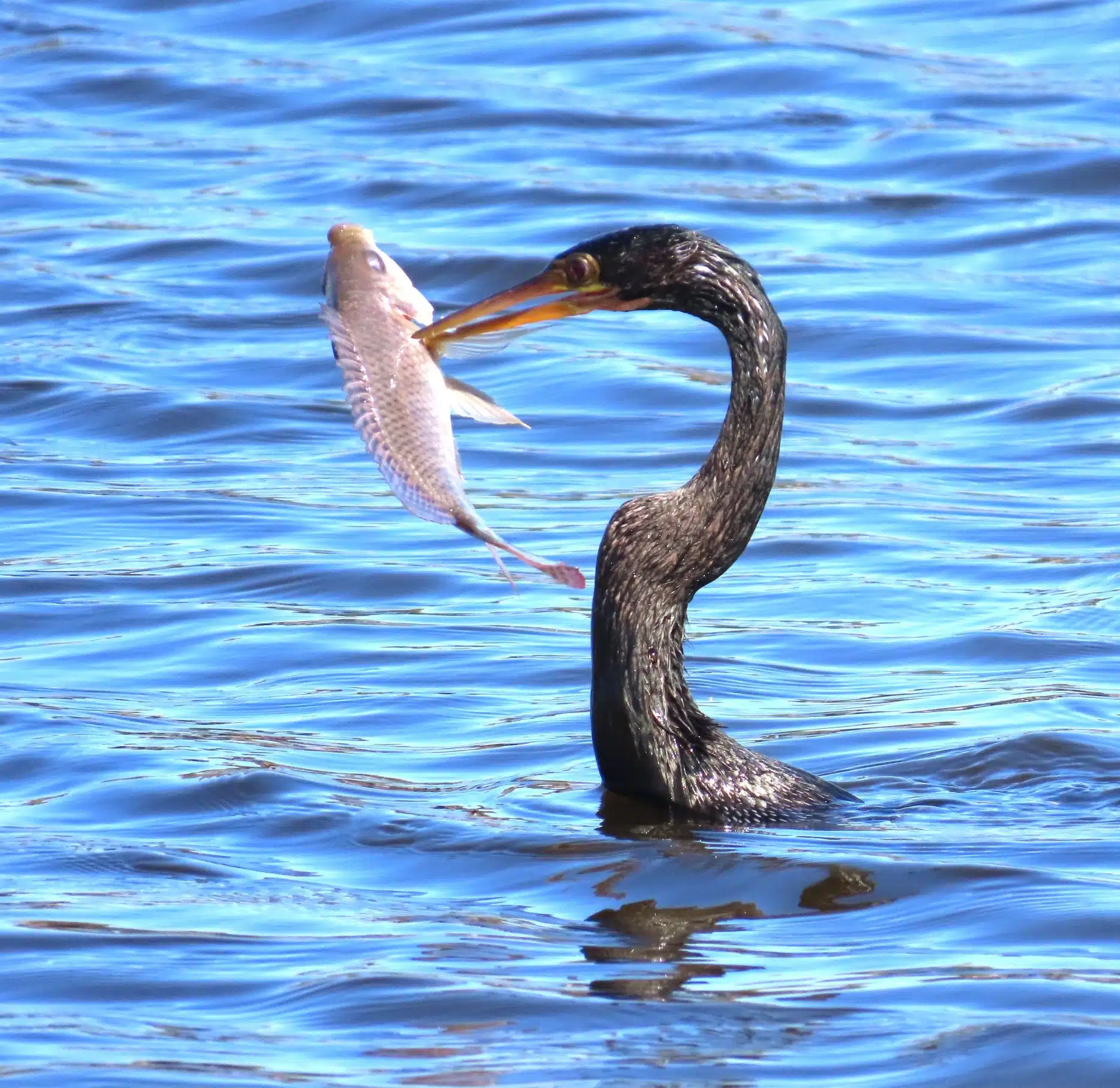
- An anhinga catches a large tilapia which it cannot swallow
-

- A glossy ibis forages in a local pond

-

- This belted kingfisher appears to be an immature male

-

- A reddish morph screech owl appears in a nest box in my yard

-

- The yellow rumped warbler is called a butter butt for a good reason

One of the interesting features of the ecology of Lemon Bay in winter is that the water clarity improves a lot. This might seem counter-intuitive for waters that are highly polluted with nutrients of human origin. But the cooler temperatures and less light result in much less phytoplankton and thus less turbidity. This view of part of my bayside yard taken from my dock illustrates this point. On the other hand my summer home in NC along the Haw River is in the grip of winter ice and snow as shown by a view Jan. 31 along the river and of my back porch. So when I complain about cool nights here in FL all I have to do is visualize this scenario!
Despite the arrival in SW FL of repeated cold fronts with temperatures dropping briefly to near freezing several times, there are hints of the warmer weather to come. My red mulberry tree is in bloom much earlier than it should normally be. The distortion of flowering times by the storm surge in the fall of 2024 may be partly to blame. Some other flowers continue to bloom in winter including one of my favorite non-natives the Madagascar periwinkle. Now in some quarters all non-natives are considered horrible plants to be exterminated. I take what I consider a more realistic approach to this question by asking if the plant is both relatively non-invasive and beneficial to wildlife at a time of year when few native flowers bloom. A similar justification may be applied to the non-native yellow elder (Tecoma) which is also more tolerant to sea water exposure than most flowers and highly attractive to our native bees. The beautiful Chinese hibiscus continues to bloom in winter but is of little value to most animals since it lacks nectar.
Many leaves are looking very poor after sustained exposure to dry northerly winds. A sign of rejuvenation to come is now showing in the tiny new reddish leaves growing on sea grapes. This native tree is truly a miracle along the coast where it tolerates harsh conditions and continues to grow well, bloom in April and attract migrating warblers, and produce abundant fruit for animals. It is a very strange member of the buckwheat family and an anomaly that is the star member in its ecological community providing cover and food.
Monarch butterflies continue to fly on warmer days and often can be seen basking to raise their body temperatures as is the case for this male. Given the prevalent cooler temperatures I was shocked to find a swarm of damselflies along the edge of a local drying pond. Two species were present- the familiar bluet and Rambur’s forktail. The latter is found in a variety of color types based on sex and age ( https://nowiwonder.com/wild-facts-about-the-ramburs-forktail-damselfly/ ). The strangest thing about this is that some females resemble males apparently in an attempt to fool overly amorous males to leave them along. Such a complicated mating system in a very ancient insect is quite amazing.
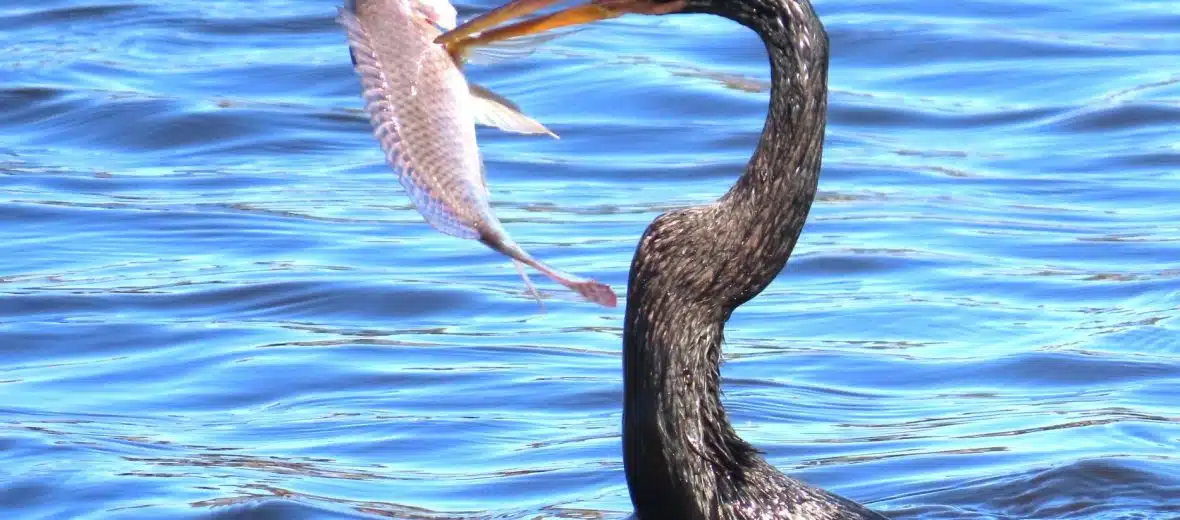
The very dry weather over the past year has resulted in many drying ponds affecting the ability of aquatic birds to feed. As ponds dry fish become easier to catch. This anhinga has speared a large non-native Tilapia but was unable to swallow such a large fish and released it. This glossy ibis in winter plumage was foraging along the edge of a pond. Kingfishers are winter residents of our area but do not breed here. They are also very shy due apparently to their harassment by fishermen who are intolerant of them as competitors. This individual is likely a first year male.
A red morph screech owl recently returned to my owl nest box which has been occupied for decades by a grayish morph female. The previous male was a red morph but I have not seen the current male which I hear calling at night.
One of our commonest winter warblers is the yellow rumped warbler which is a winter resident but breeds far to the north. It is often humorously referred to as the “butter butt” and you may see why this is the case when you look at its backside. As well known as this species is I wonder how many of us ask what the function of this strange coloration is? The equally common palm warbler with a very similar range has yellow under tail coverts. These color patterns are likely sign stimuli that assist birds in distinguishing their own species in the dense forest vegetation of their summer habitat.
So despite the fact that we are now in the middle of winter in SW FL there is still a great deal of interesting natural history to enjoy. So find a sunny spot to keep warm and watch the panorama unfold as the natural world continues to amaze us.