

-
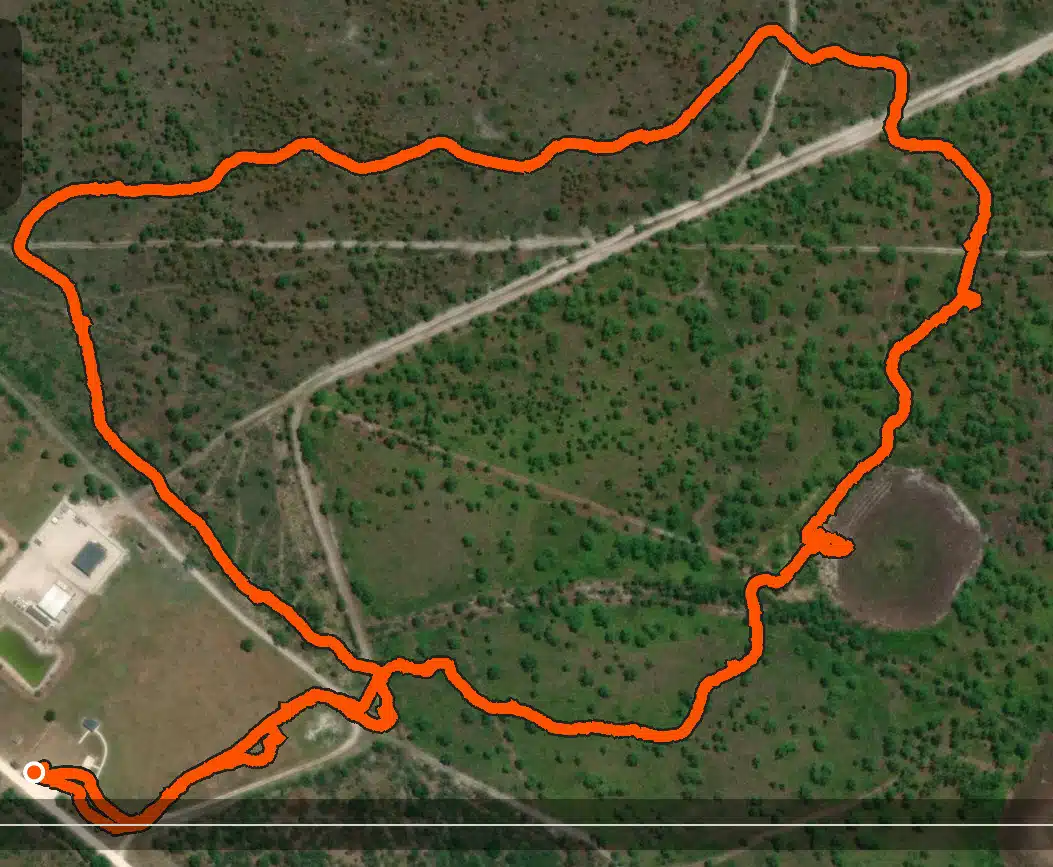
- The 1.7 mile loop Gordon Smith Trail
-

- The eastern side of the trail

-

- The western side of the trail

-
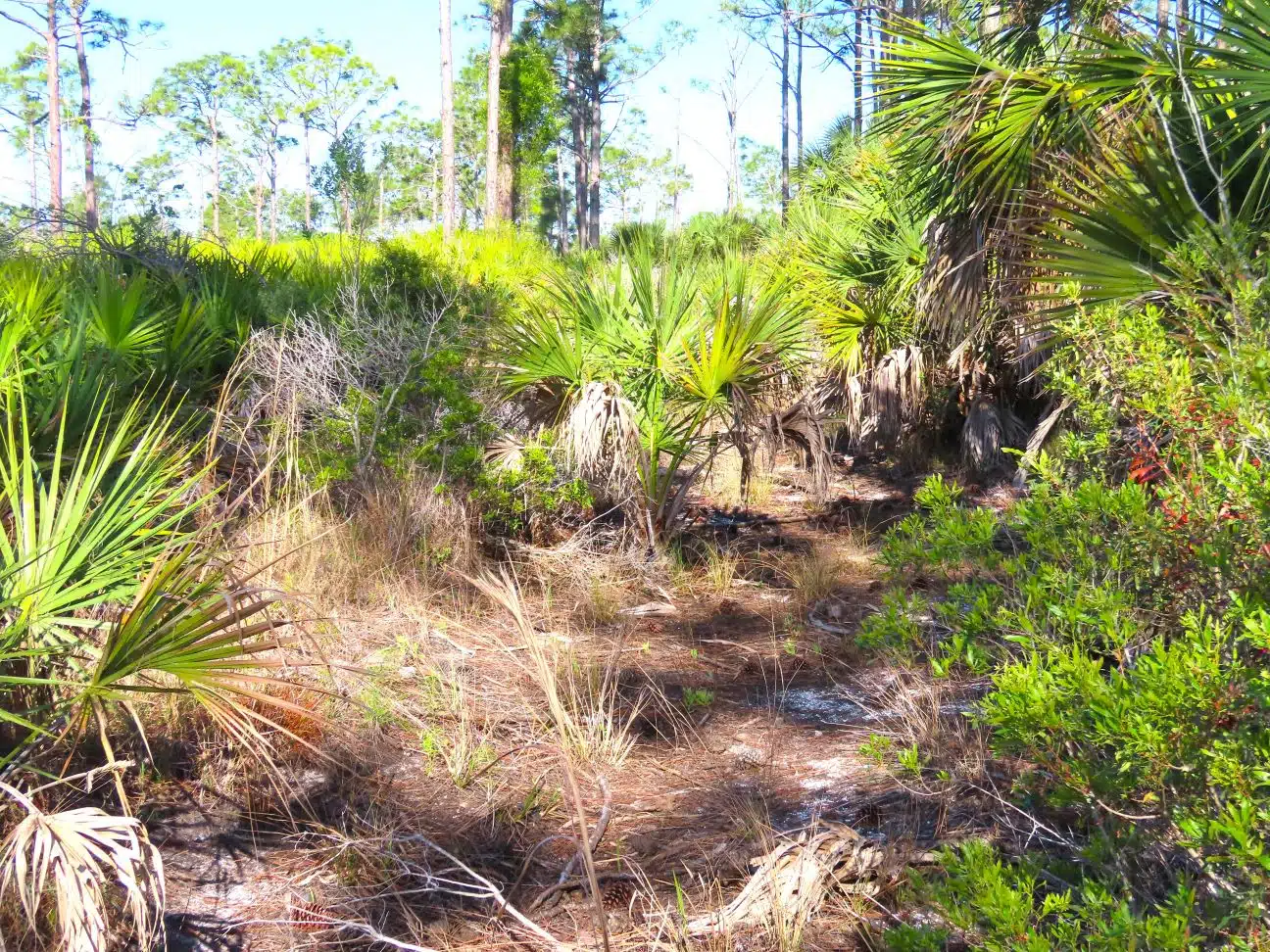
- A fire break has different vegetation
-

- A panorama of the drought impacted wetland

-
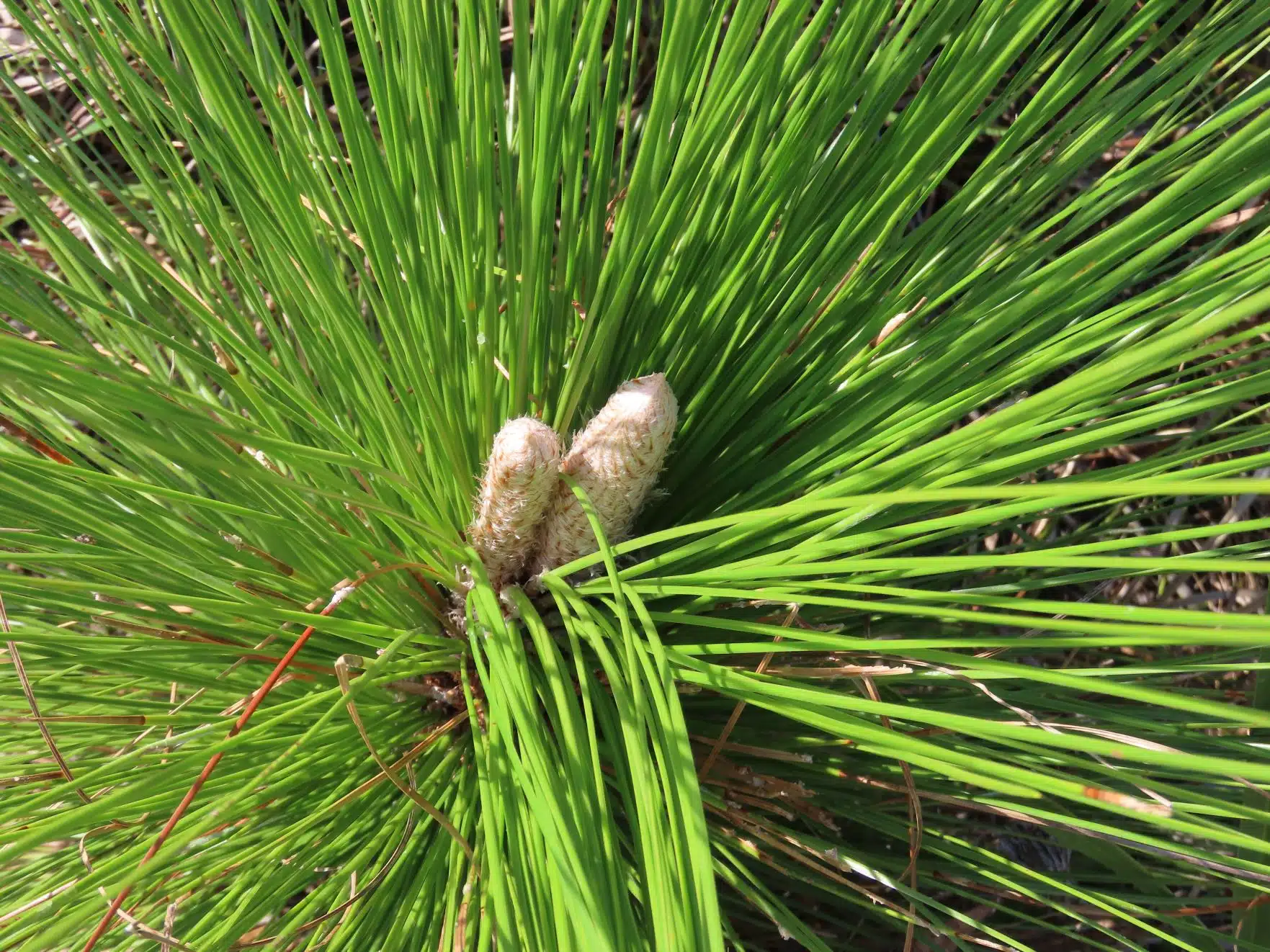
- White growth tips of a long leaf pine
-
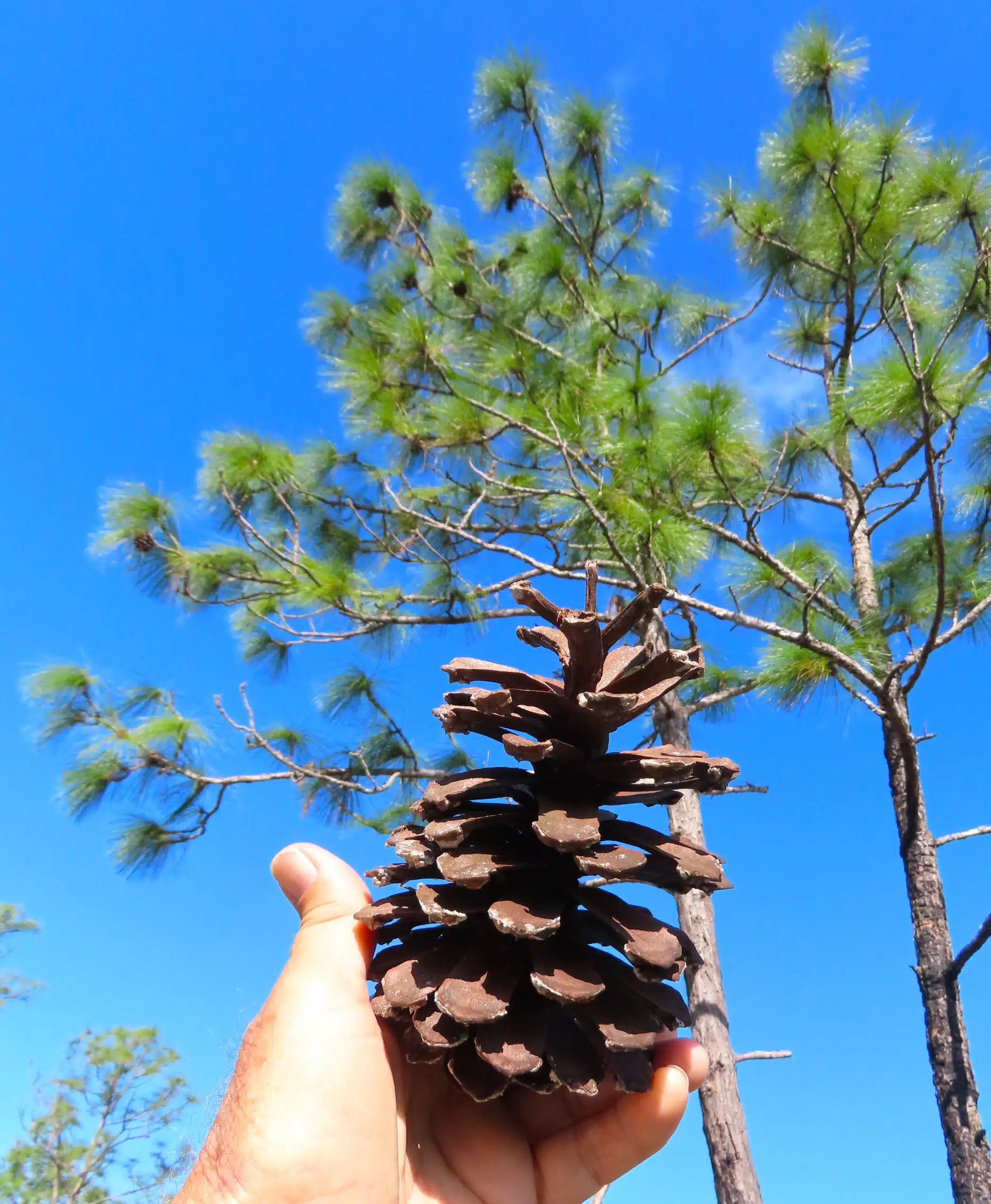
- A large cone and long leaf pine tree
-
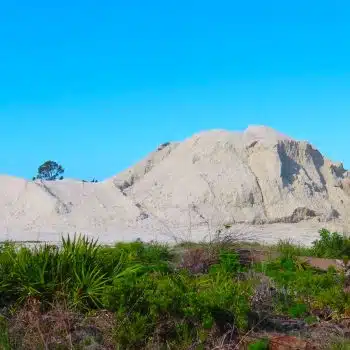
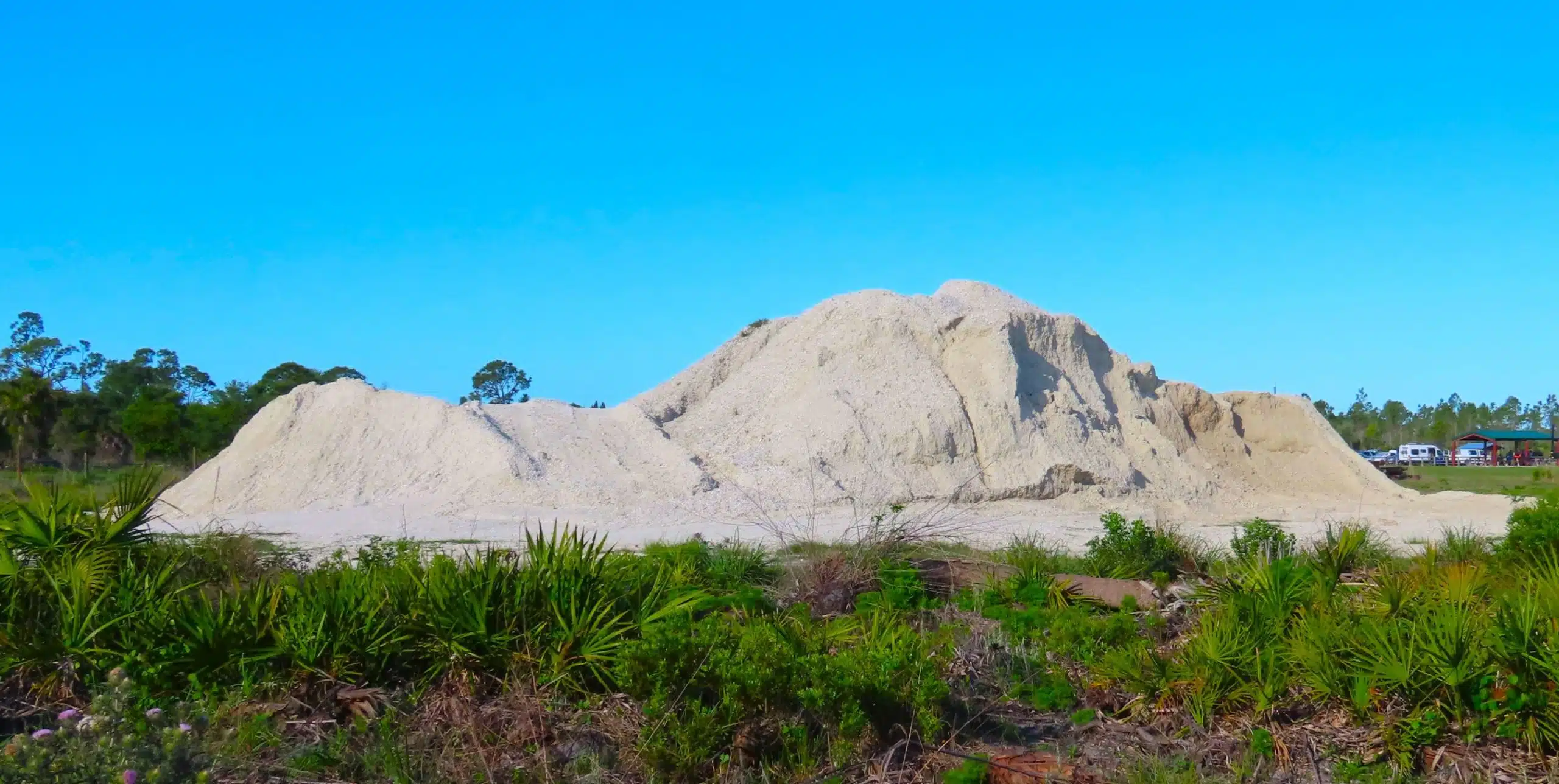
- The gravel pine made up of fossil sea shells
-

- The Wagner’s arc tells us this is about 2.5 million years old

-

- A Nuttall’s thistle flower with a green bee

-

- Thistles grow only in disturbed ground

-

- A procession flower

-
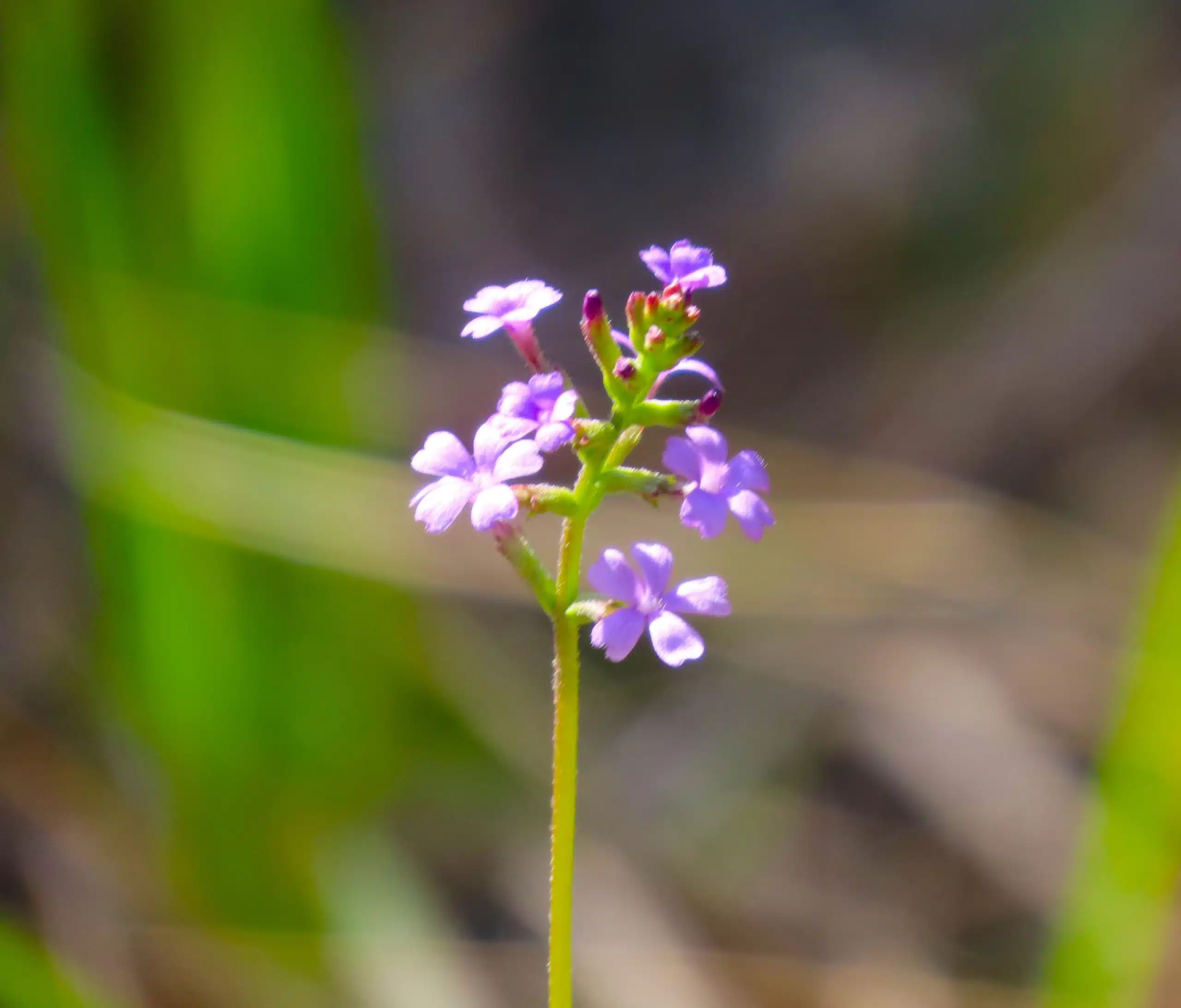
- A blue heart flower
-

- Old seed heads of a musky mint

-
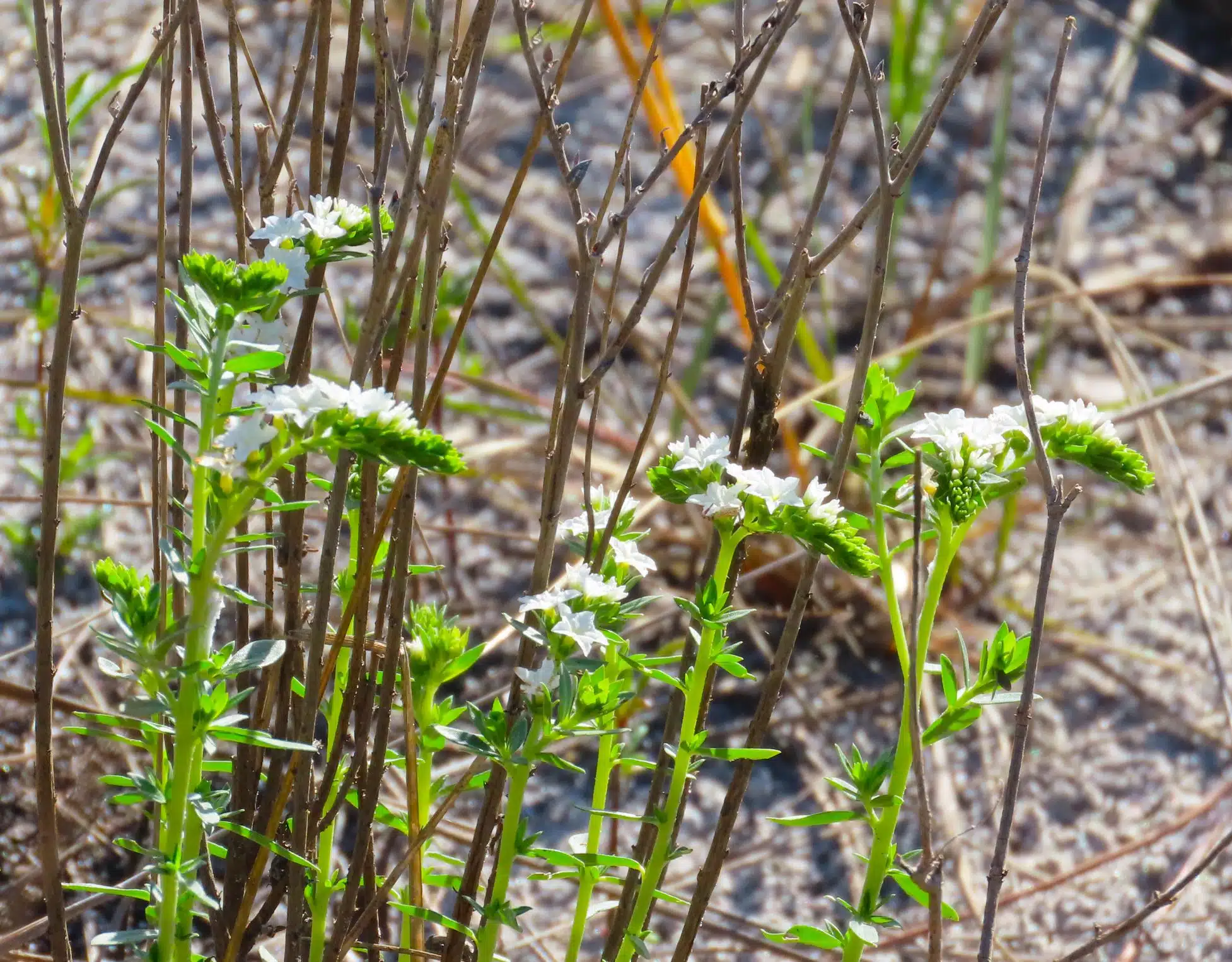
- A pineland heliotrope in bloom
-

- A rose of Plymouth- a type of gentian

-

- A milkwort- a bachelor’s button

-

- A white lobelia

-
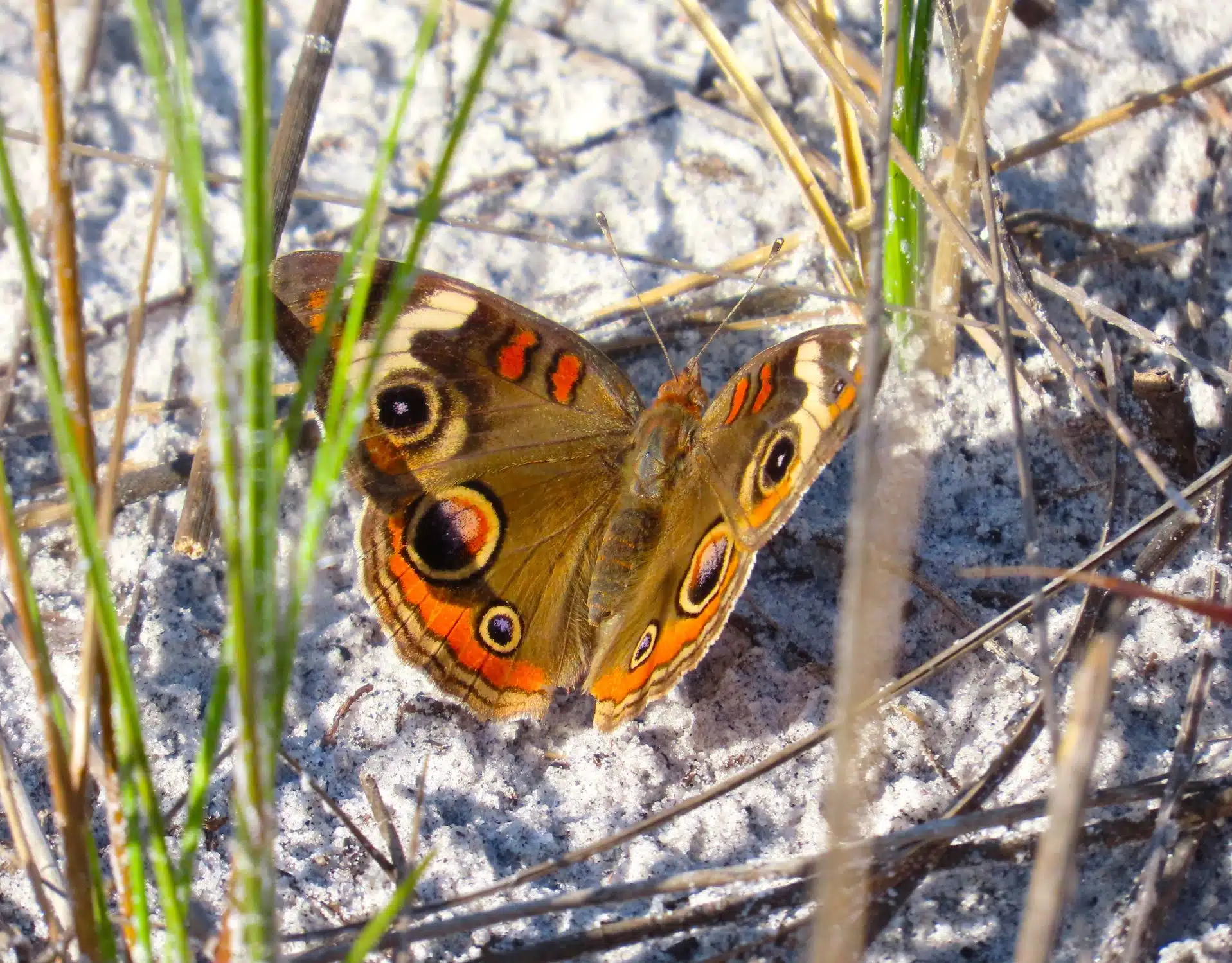
- A common buckeye butterfly
-
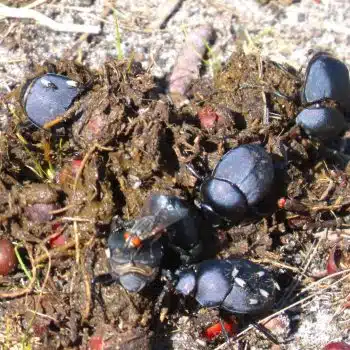
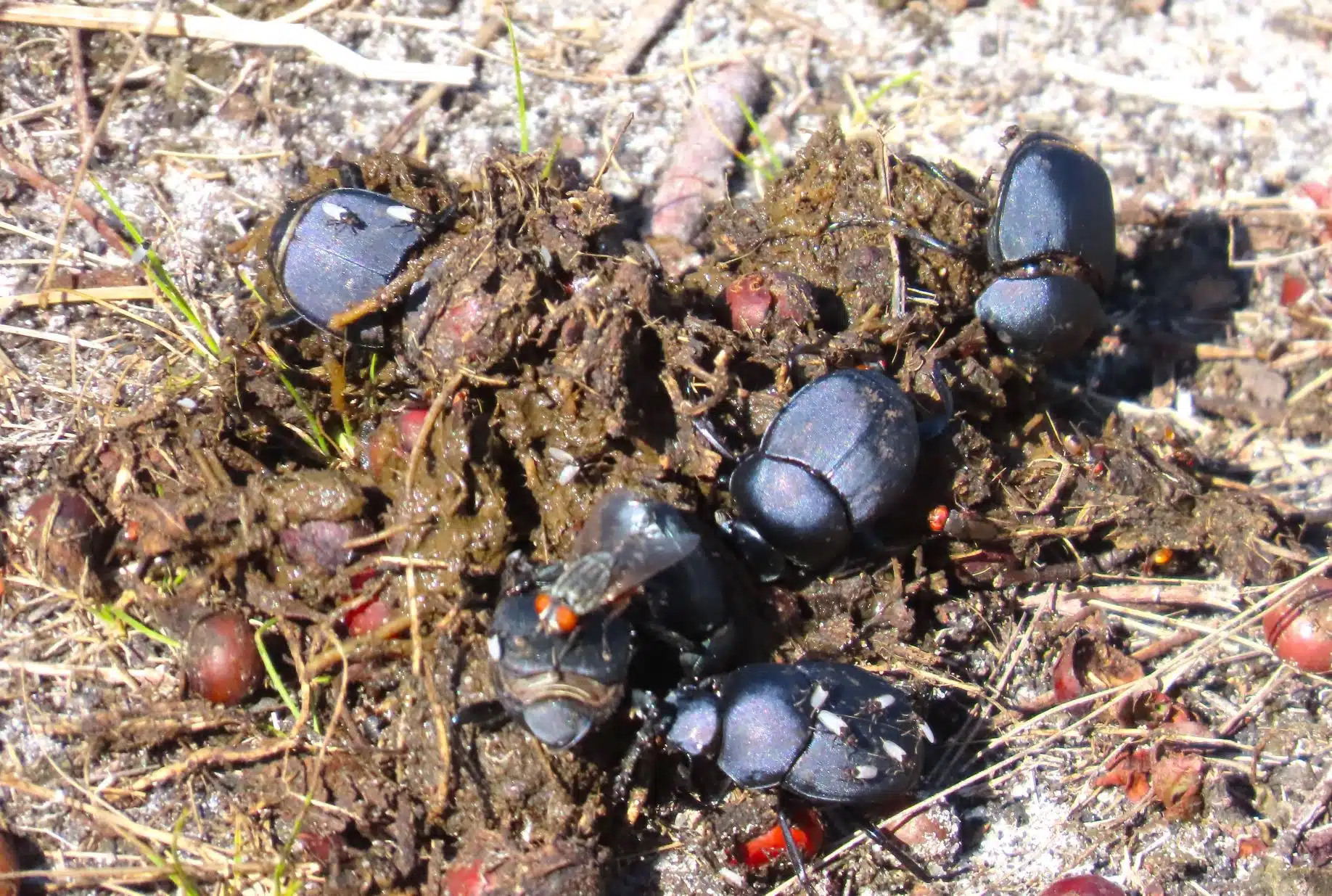
- Dung beetles on a fecal mass
-
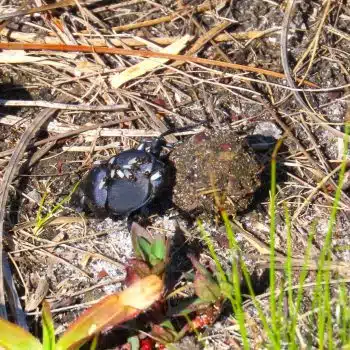
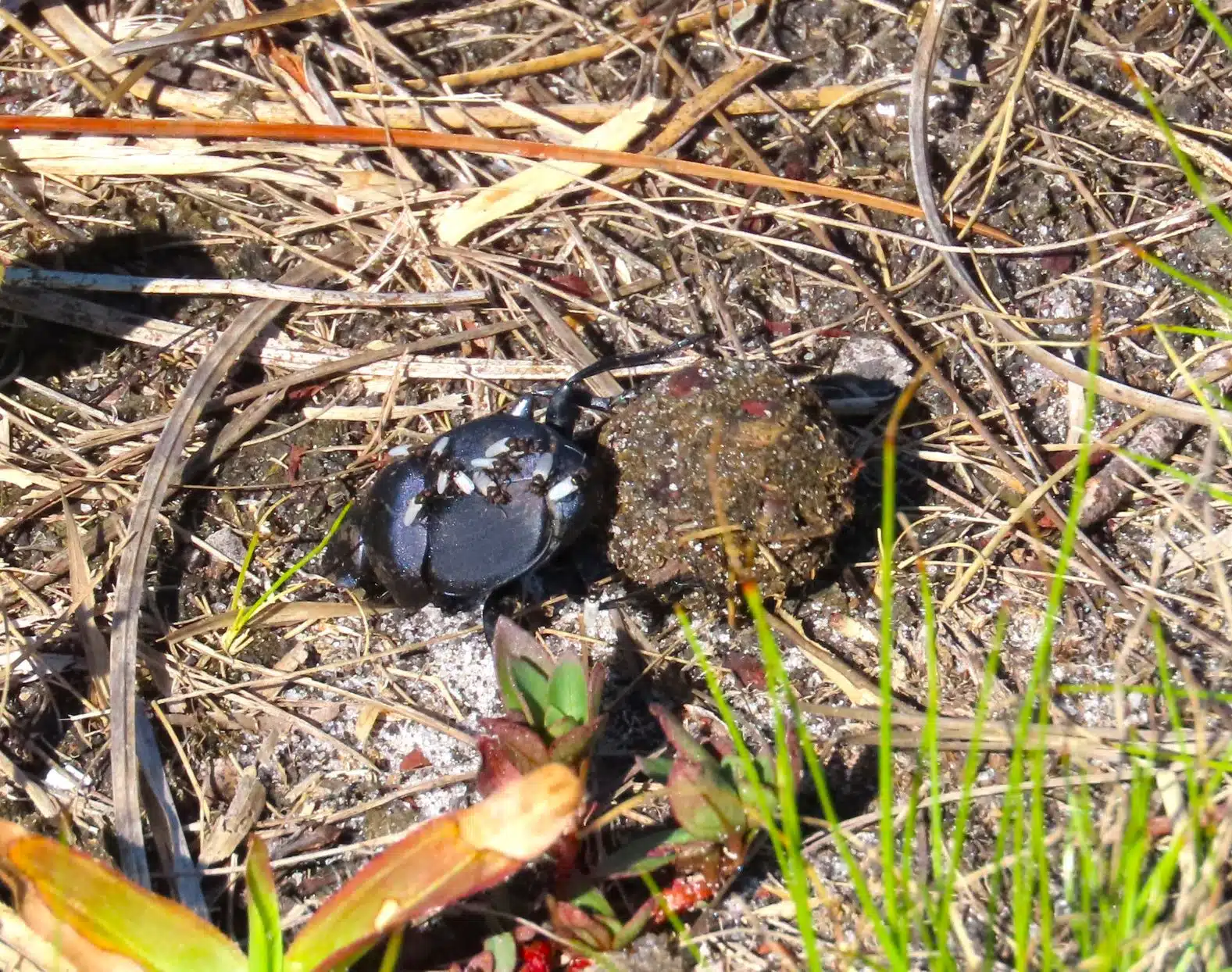
- A dung beetle rolls away its ball of dung
My last nature walk in Florida this season on April 11, 2026, is along the Gordon Smith Trail in Myakka State Forest. This is always a very interesting spot due to the large area (more than 8000 acres) of undeveloped land that surrounds it. One variation this year is the extreme drought we are in and the fact that the parcel has not been burned for several years. The red line designates a hike I made around the entire 1.7 mile perimeter of the trail. A brief photographic comparison is shown here of the eastern and western sides. A long history of frequent winter burns has killed many of the pine trees, especially the young age classes. In my opinion fires should only be set during the summer when natural fires would have been started by lightning. There are not really enough trees to consider this a true “forest” and certainly it is not anywhere near a climax forest. The dense understory is made up primarily of saw palmetto and a few shrubs such as wax myrtle. A view of an old fire break is interesting since the slight decrease in elevation excludes saw palmettos, presumably by too much moisture in summer. The effects of the extreme drought are quite evident in a panorama of the normally verdant natural wetland, which is quite dry and lacking many typical obligate wetland plant species. The willow head in the center marks the deepest spot of several feet.
The long leaf pines are quite distinct this time of year with their white growth buds. Slash pines have darker buds, smaller cones, and much thinner twig tips.
An unusual and very interesting feature of the walk is a large gravel pile near the start of the trail. In this part of Florida road fill is often composed of fossil beds mined from ancient marine sediments. Since these consist basically of millions of fossil shells often quite intact it is instructive to examine them more closely. I noticed a number of Wagner’s arc shells (Arca wagneriana). This species is an extinct “guide fossil” for the middle Caloosahatchee formation approximately 2.5 million years old. It is quite remarkable to hold these unbroken shells millions of years old and think about the many large previous changes in sea level (more than 30) of this area.
This time of year Nuttall’s thistles (Cirsium nuttallii) are much in evidence on the roadsides of the state forest. Although they are often considered an obnoxious plant, thistle flowers are quite attractive to native pollinators. They only grow in disturbed soils as an early successional plant and thus will disappear if you avoid changing the surface of the land artificially. For example thistles are common in pastures but will disappear after the cattle and horses are removed.
Milkworts (Senega formerly Polygala) of many species are common in pine flatwoods as illustrated here by the procession flower and the bachelor’s button. It is interesting that they are blooming at a low rate even during a severe drought. The blue heart is another flower common this time of year in open areas. It is interesting that quite a few seed heads of musky mint are present illustrating that the plants bloomed here last year. This is however a plant that requires moderate soil dampness and will not likely bloom until the rains start in summer. Pineland heliotrope (Euploca) is in full bloom and a common buckeye butterfly was feeding on the flowers. One of the most striking flowers is the Rose of Plymouth (Sabatia stellaris), a spectacular type of gentian typical of flatwoods. White lobelias were present but not in the numbers usually seen in wetter years.
One of the more interesting sights along the trail was a pile of dung (maybe from wild pigs) that had attracted quite a number of dung beetles. The beetles were actively gathering up dung, rolling it into balls and pushing these balls away from the dung pile. These will be subsequently buried and eggs laid in them.
Despite the dry year I was surprised by the number of flowers and the overall health of the terrestrial habitats. The wetland on the other hand was severely impacted by the lack of water but will I hope recover when the rains return next summer.
A walk in nature can be very therapeutic for your soul, divert your mind from the everyday cares and frustrations of modern life, and provide a mental gateway into the spectacular beauties of the natural world.